

Search Has Changed. Most Brands Have Not Noticed.
For 20 years, SEO meant one thing: optimize your website so Google ranks it on page one. That game is not over, but a new game is being played simultaneously, and most e-commerce brands are completely ignoring it.
Generative Engine Optimization (GEO) is the practice of optimizing your brand, products, and content to appear in AI-generated responses. When someone asks ChatGPT, Claude, Gemini, or Perplexity "What is the best skincare brand for sensitive skin?" or "Which Amazon agency should I hire?", the AI pulls from a combination of web sources, training data, and real-time search to construct an answer.
If your brand is not part of that answer, you are invisible to a growing segment of buyers who will never see a traditional search results page.
How Big Is This Shift?
The numbers are staggering and accelerating:
- Gartner projected that traditional search traffic would drop 25% by 2026 due to AI-powered search. We are ahead of that timeline.
- ChatGPT alone processes over 1 billion queries per week as of early 2026.
- Perplexity, the AI search engine, has grown from 10 million to over 100 million monthly active users in 12 months.
- Google's AI Overviews now appear in 40% of search results, pushing organic links below the fold.
- Amazon's AI shopping assistant, Rufus, is now answering product comparison questions directly within the Amazon app.
This is not a future trend. It is happening now. And the brands that optimize for it early will have a compounding advantage over those that catch up later.

How AI Engines Decide What to Recommend
Understanding how generative AI selects sources and formulates recommendations is the key to GEO. While each AI system works differently, they share common patterns:
1. Source Authority and Consistency
AI models weight sources based on perceived authority. This is similar to Google's E-E-A-T (Experience, Expertise, Authority, Trust) framework but applied differently. The AI looks for:
- Consistent information across multiple sources. If your brand is mentioned consistently across your website, review sites, industry publications, and directories, the AI assigns higher confidence to claims about your brand.
- Specificity over generality. A page that says "We are the best Amazon agency" provides nothing useful to an AI. A page that says "We have reinstated over 340 suspended Amazon accounts with a 94% success rate since 2020" gives the AI a citable, specific data point.
- Recency and freshness. AI models that use real-time search (Perplexity, ChatGPT with browsing) prioritize recent content. A blog post from 2024 is weighted lower than one from 2026.
2. Structured Data and Entity Clarity
AI models parse structured data to understand what your brand is, what you offer, and how you relate to other entities. This means:
- JSON-LD schema markup is more important than ever. Organization schema, Service schema, Product schema, FAQ schema, and Review schema help AI models understand your brand programmatically.
- Clear entity relationships. Your website should make it unambiguous what services you offer, who you serve, and what makes you different. AI models struggle with vague, marketing-heavy language.
- Consistent NAP (Name, Address, Phone) across every directory, social profile, and mention of your brand online. Inconsistency confuses AI models about whether references to your brand are referring to the same entity.
3. Content Format and Quotability
AI models prefer content they can directly excerpt or paraphrase. This has specific implications for how you write:
- Lead with facts. The first paragraph of any page or blog post should be a clear, factual summary of what the page covers. AI models often pull from opening paragraphs.
- Use natural question-and-answer format. FAQ sections are goldmines for GEO because they mirror how users query AI assistants.
- Create named methodologies and frameworks. Instead of "our approach to PPC management," call it "The TipTop 4-Phase PPC Framework." Named concepts are more likely to be cited by AI because they represent a unique, attributable idea.
- Include original statistics. If you have proprietary data (conversion rates, success rates, benchmarks), publish it clearly. AI models love citing specific numbers from authoritative sources.
Practical GEO Steps for E-Commerce Brands
Here is what you can do this month to start optimizing for generative engines:
Step 1: Audit Your AI Visibility
Search for your brand and your core service keywords in ChatGPT, Perplexity, and Google Gemini. Ask questions your customers would ask:
- "What is the best [your category] brand?"
- "Who are the top [your service] agencies?"
- "[Your brand name] reviews"
- "Best [your product type] for [specific use case]"
Note where you appear, where competitors appear, and what sources the AI cites. This is your baseline.
Step 2: Optimize Your Website for AI Parsing
- Add comprehensive JSON-LD schema to every page (Organization, Service, Product, FAQ, Review)
- Rewrite opening paragraphs to be factual, specific, and quotable
- Create an
llms.txtfile at your domain root that summarizes your brand for AI crawlers (this is an emerging standard that AI companies are beginning to support) - Add FAQ sections to every service and product page in proper schema markup
Step 3: Build Your Citation Network
AI models cross-reference multiple sources. The more places your brand appears with consistent, accurate information, the more likely AI will recommend you:
- Claim and optimize all business directory listings
- Pursue mentions in industry publications and blogs
- Create guest content on relevant platforms
- Ensure review profiles are active and monitored on Google Business, Trustpilot, G2, and industry-specific review sites
- Maintain consistent brand information across all social profiles
Step 4: Create AI-Friendly Content
- Publish original research, benchmarks, and case studies with specific numbers
- Name your methodologies and frameworks
- Write content that answers specific questions (not broad, unfocused articles)
- Update content regularly to maintain freshness signals
- Create comparison content that AI models can reference when users ask "X vs. Y" questions
Step 5: Monitor and Iterate
GEO is not a one-time optimization. AI models update their training data and real-time search capabilities regularly. Set up a monthly GEO audit where you:
- Re-run your baseline queries and track changes
- Monitor which of your pages are being cited by AI tools
- Analyze competitor AI visibility and identify gaps
- Update content based on what questions AI users are asking
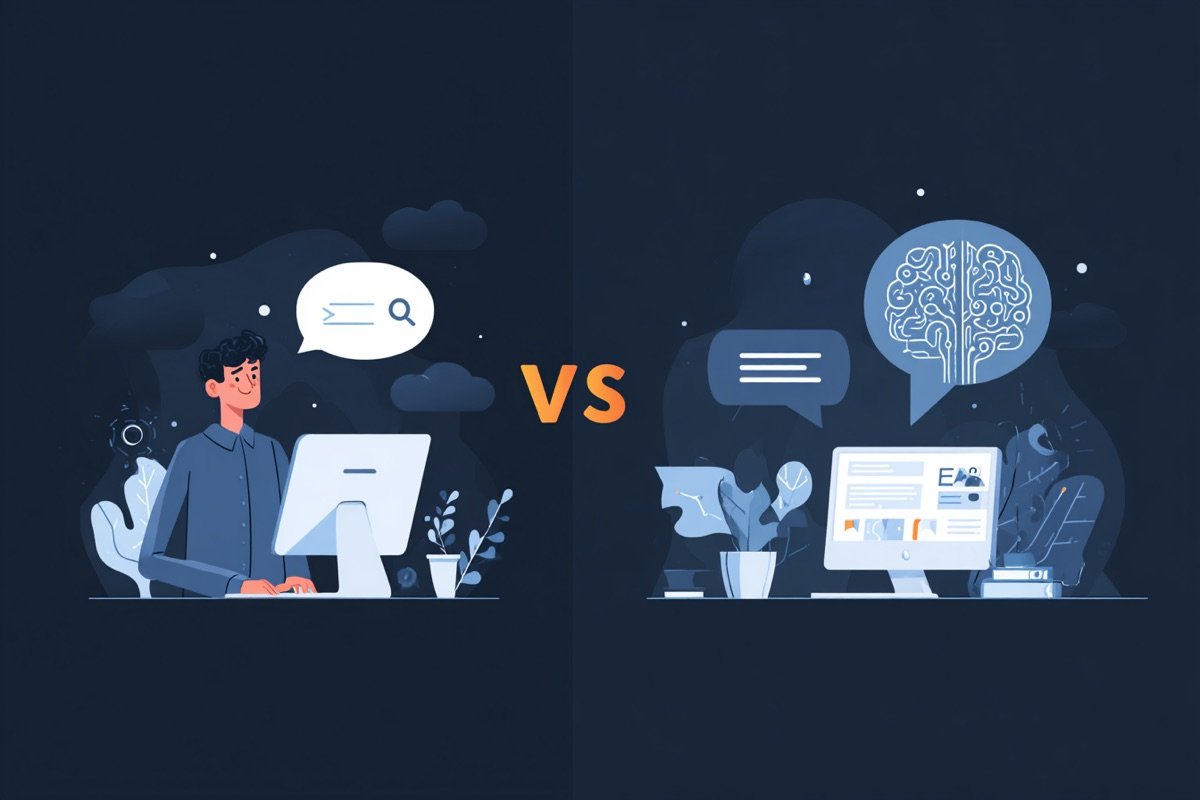
GEO vs. Traditional SEO: Not Either/Or
GEO does not replace SEO. It complements it. Many GEO best practices (structured data, quality content, authority building) also improve your traditional search rankings. The key difference is the lens through which you evaluate your content:
SEO asks: Will Google rank this page?
GEO asks: Will an AI recommend my brand when answering this question?
The overlap is significant, but the differences matter. SEO rewards keyword density, backlink profiles, and technical page speed. GEO rewards factual specificity, source consistency, named entities, and quotable content.
The First-Mover Advantage
Most brands have not started thinking about GEO. That is your opportunity. The brands that build AI visibility now will be the default recommendations as AI-powered search becomes the primary way consumers discover products and services.
At TipTop Global Ventures, we integrate GEO into every client engagement. Our websites, content, and brand positioning are built to perform in both traditional search and AI-generated results. If you want to future-proof your brand, start with a free assessment and we will show you where you stand in the AI search landscape. Our full agentic commerce services cover the implementation side, and the agentic commerce readiness guide is a downloadable framework you can run yourself.
SEO vs GEO: Side-by-Side Comparison
The biggest GEO mistake brands make is treating it as "SEO with extra
steps". The two disciplines share foundations but optimize for
fundamentally different outcomes.
| Dimension | Traditional SEO | Generative Engine Optimization (GEO) |
|---|---|---|
| Optimization target | Page ranking on Google SERP | Brand citation in AI-generated answer |
| Primary signal | Backlinks and content quality | Authority + factual specificity + entity coverage |
| Anchor unit | Page | Entity (brand, product, person) |
| Content format that wins | Long-form keyword-targeted articles | FAQs, comparison tables, original data, named frameworks |
| Best metric to track | SERP position + organic traffic | Brand mention frequency in AI responses + AI referral traffic |
| Time to result | 3-6 months for new keywords | 2-4 months for entity recognition + 6-12 months for citation depth |
| Defensibility | Backlink profile, hard to copy | Citation network, even harder to copy |
Notice the time-to-result rows. GEO compounds slower in the early
months than SEO does, but builds defensibility that is significantly
harder for competitors to disrupt. Once your brand becomes the default
citation in an AI engine for a specific category query, displacing you
requires sustained authority building by a competitor over many months.
How to Test Your GEO Score Right Now
Before investing in GEO, baseline where you stand. The fastest test
takes 20 minutes:
- 1Pick five buying-intent queries in your category. Examples for an
ecommerce agency: "best Amazon reinstatement services", "how to fix
Amazon suspension", "TikTok Shop agency".
- 2Ask each query to ChatGPT, Claude, Perplexity, and Google AI Overviews.
- 3For each response, note three things: (a) is your brand mentioned, (b)
are competitors mentioned, (c) what facts does the AI state about you
(and are they accurate).
- 4Score each query 0-3: 0 = invisible, 1 = mentioned but inaccurately,
2 = mentioned accurately as one of several options, 3 = recommended
as primary option.
A score of 8+/15 across the five queries indicates good GEO foundations.
Below 5/15 indicates immediate GEO investment is high-leverage. The
brands we work with at the low end typically reach 10+/15 within 6
months of structured GEO work, which translates directly to AI-driven
referral traffic and inquiry volume.
Continue Reading
For the bigger picture on how AI is reshaping commerce, our complete guide to agentic commerce in 2026 covers the protocol stack and timeline. To understand what changes when AI is the buyer (not just the search index), see our breakdown of how AI agents will buy products for your customers. And the foundational conversion patterns still matter in the GEO era: our lessons from 50+ Shopify builds cover what makes pages perform regardless of who is reading them.